Showing posts with label leading. Show all posts

Friday, 14 February 2014

Penelope’s Guide to Blogging

So I've started reading Penelope Trunks blog and I have to admit I'm quite fixated. The way she writes just draws me in and I want to share everything. You know how it is when something resonates with you. Of course I don't want to just share everything I read because that's not what blogging is about.

Today I'm sharing Penelope’s Guide to Blogging because it is typically straight to the point. I've been exploring various approaches the past few months and learning a lot and found much of it resonates with Penelopes advice.

I notice that she has created a bunch of posts on a topic and then made each post the title of each paragraph. That's the vision I have. Her focus on getting on with it speaks right to me. I believe you get good at what you do regularly and that's what I'm finding. When I look at older posts compared to now I see a marked difference.

Success will take time

I like her comment about lack of readers and that you won't make money directly because I feel it's true. Like anything there are the high flyers and the rest of us. The few make most of the money. Those are often the people who get the most readers. That takes time and effort. Just like any venture you rarely succeed early on. It's just nice to be reminded early on to give you better perspective on your results.

I also add things to my blog that I want to read. That's the main criteria I set. If I feel I really want a record of an article later on then I post about it.

I like having Multiple blogs

That is also why I break one of Penelopes guidelines. I have 3 blogs and I'm planning more. The reason is because my core passion covers so many topics from 3d virtual reality and programming to biology and sport. As one it just seems like a mish mash of ideas. Separately each blog has a focus I can build on. As I go I link them up but for now I feel it helps to have separate blogs for a clearer focus for each.

I big advantage is that I can try lots of different things out. I believe in achieving success through learning which means trying ideas out. I'll be moving to wordpress soon which is a big change. Having multiple blogs allows me to spread the risk. I'll move the least popular or challenging blog first. Make all the newbie mistakes and do a better job with each successive blog.

It's obviously a lot more work but then I got 5 A levels with this approach where most get 3. So I could aim for 50 points when everyone else could only get 30. They had a lower maximum point limit. I had to work harder but once I realised how each A level could help the other it all got quite easy.

So I've taken Penelopes basic list of points to give you a checklist, check out her article for the full detail, I found it a useful quick primer on a fun and practical way to approach blogging.

Advanced Topics:

Wednesday, 18 December 2013

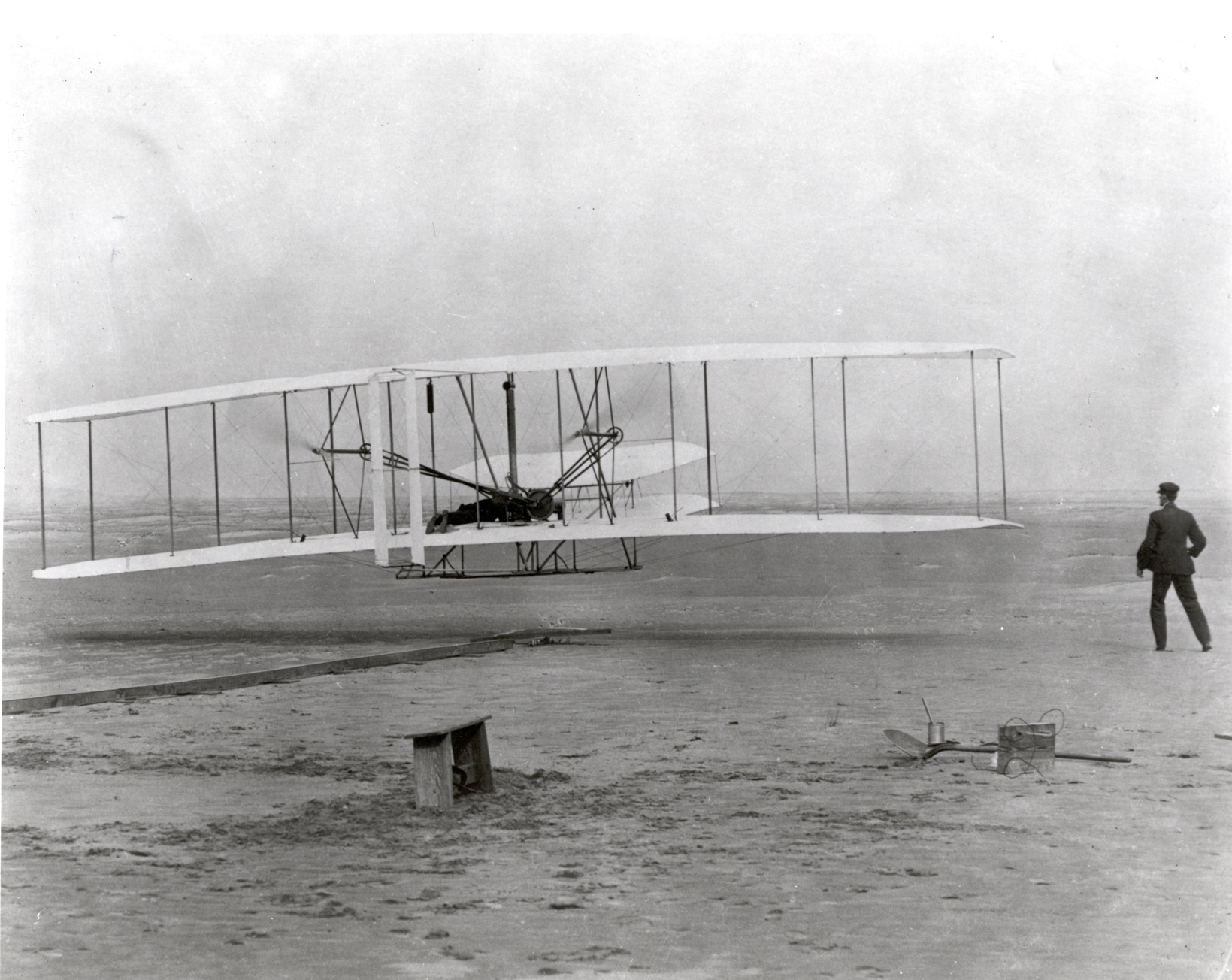
What made the Wright brothers successful


I needed a little inspiration in the challenges of being an entrepreneur and inventor. I just checked out the Wright Brothers because at the time they pioneered human flight there were hundreds of others trying to do just the same. I wanted to understand how long it took them. What kinds of things they did. How much detail they went into and what they focused on.

What I already knew is that many incredibly wealthy and well connected entrepreneurs were also trying but didn't get the results. I wanted to understand why. Was it a fluke or was it down to process. Were the Wright Brothers better inventors, or was their relative lack of resource beneficial to them in some way. It would be a nice story it if it were.

What I learned so far was that they did the basic thing good engineers do. Tested, prototyped, gather thorough data. They also didn't do everything themselves and it was their choices and way of thinking that led to success.

Many others were building stronger engines and propellers. The Wright Brothers focussed on controls. What I feel that means is that others focused on quantity e.g. power and lift while the Wright brothers focused on quality or controlling the power. This explains why their first official flying craft didn't actually do much. It only went a meter or so in the air and sustained that for a short distance.

They didn't care about height or speed at first. Just in level controlled flight. They conducted many glider tests before hand and developed their mechanical skills so they could develop what they needed. Along the way they built a business making bicycles because it helped them pursue their love of flying.

Essentially I feel it is their holistic approach to invention. Seeing that others could deliver the required power but they couldn't control it. The limitation was therefore control not power and that's what they perfected.

They also investigated how birds fly. Learning how they adjusted their wings to tilt their bodies and turn. Many engineers believed a plane should stay level and used the principles of a train on a track. In the end we have learnt that the best solution is a mix between a bird and a large fish like a dolphin. The wings may be inherently unstable but less susceptible to upset by gusty cross winds. Tilting the plane to aid vertical and horizontal movement uses the plane itself to aid the process. Providing a much greater force with relatively little effort. Leaving the control planes in the tail for finer control they don't have to focus on providing lift itself. Instead, they just control where the nose of the plane points.

This is very similar to a formula one car. just the reverse idea. In a Formula One car the wheels control power and direction. The rear wheels are only concerned with power. The front are only concerned with control. All wheel drive is best for rallies and dirt tracks not racing on tarmac where the separation of control and power is key.

So it is essentially a similar principle. The Wright brothers used gliding to teach them about control and leaving motor driven flight until later. They followed others attempts that used more power and different styles of craft but stuck to their original idea that the pilot must be in full control before power be added.. Everything must be designed around this concept.

They also believed that the basic wings and engines required already existed. They learnt to fly unpowered craft first. Others just put engines and untried controls together and tried them out without learning to fly unpowered first. They often crashed.

The brothers experience with bicycles also benefited them because they knew from experience that leaning to help steer and control a bike is the most natural thing. With open minds like this they could see how common this approach was in the natural world.

Overall this process reminds me of Darwin. He felt that much of the knowledge was already there. He did many tests himself and compiled many statistics but clearly built his ideas on the foundation of others work. He felt there needed to be a complete story but the essential ingredients were already in place.

Throughout the analysis of the Wright Brothers work it is clear how much they learned from others. Putting it together and seeing the whole was most important. They don't claim to have many original ideas except how they put the overall control surfaces together.

Essentially they built a powered glider. Thus building on decades of proven knowledge ensuring that if the engine failed the pilot could still land safely assuming he knew how to glide. It also ensured that any one who knew how to glide could learn how to control a powered glider. The simplicity is a big part of their success.

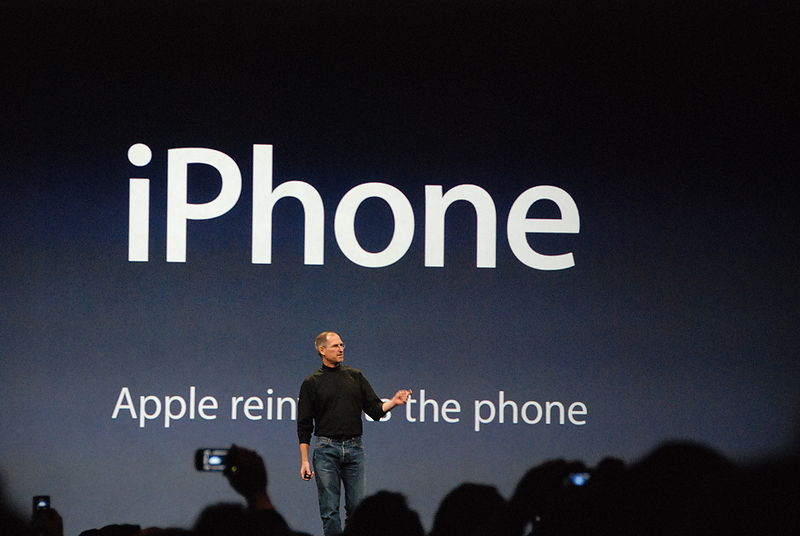
It was fascinating to learn so much. The workflow sounds so similar to other entrepreneurs that have had success. I'm thinking of Apple among many others. Good to know.

Friday, 18 October 2013

Learning is innate. How the changing world can help education


The evolution of learning is a fascinating topic. Learning is my strength because I was brought up to think that learning is innate and every challenge is surmountable. In fact learning is never really changing, only the tools and processes we use to learn will change. The education industry has been struggling to figure out how these new tools can help people learn.

I've never thought it's that difficult because learning is about the human process, the tools are just facilitators. I've been waiting for years for my employer the Open University to realise this. Listening to a 2012 HEA conference keynote by Martin Bean my CEO/Vice Chancellor excites me because he seems to get it. So much of what he says in this keynote reflects what I think. That is why I really like what is happening under his watch at the OU. I simply feel that all the new things we can do these days are simply what we have been waiting for.

The most sophisticated technology in the learning process is always the learner not the tool used to teach them. Learning is really just a case of getting information into a persons head and body and then helping them figure out how to use this information to get something done. You have learnt something when you overcome a challenge that you previously couldn't. That is how I see it.

Humans have an incredible capacity to consume information and get it into their brains. We have senses including eyes, ears and touch which we can use all at once. The quantity and quality of data these senses can consume is terrific. Newer tools are just making it easier to make full use of these senses. Humans are also able to combine their senses to achieve secondary or tertiary senses like proprioception and kinaesthetic awareness. It is now getting possible to speak to these senses through devices like the kinect.

The point here is that people will pay for the ability to overcome a challenge that matters to them. If you can make this happen faster and more easily then people will pay more. So, learning isn't really changing because humans aren't changing. They're just doing what they always did but with better tools and more support. So standards have risen, content is now cheap and the market is exponentially larger. Surely that is a huge opportunity.

What is needed is simply going back to the essence of learning and re interpreting existing content, tools and assessment methods in light of what is possible today. Surely we can make the learning process the innate, natural and easy process humans are designed for?

Many thanks to Jonathan Vernon (@mymindbursts) who inspired this post by sharing Are we at the Napster moment in HIgher Education. A thought provoking article.

Thursday, 3 October 2013

Launch is dead for free to play games


Recording a thoughtful timely article Launch is dead for free to play games I found through linkedin. I am now seeing my route to like minded people through providing content just like this post. I write a lot of stuff myself but also share good stuff from others.

I am finding it help me connect with people who have similar interests. From there I feel symbiosis will occur naturally in that other things I create like apps and tools will be useful to them and things they do will be useful to me.

Monday, 8 August 2011

Why only drinks that stimulate thirst are profitable

Why only drinks stimulate thirst are profitable has been re-produced at my new blog Cell Your Sole.

So I've had this niggling question for quite a while now. 'Why do most drinks available not quench your thirst?'. for along time I've been ordering a separate glass of water with any drink at a restaurant. In a club or bar I just accept that each drink is going to make me want another.

But why is this the case? Why is each drink so strong and often quite concentrated to make me need a separate glass of water?

I think the reason is basic economics. I don't think it's anything particularly sinister on the manufacturers or sellers part. The drinks market is very competitive and needs sales volume to turn a profit. So each drink must be sold in volume. I just think that it doesn't make sense financially to sell drinks that don't encourage repeat purchases because you won't sell many units of a drink that actually quenches your thirst.

This explains to me why the best sellers are coffee, tea, coke and many other caffeine related drinks. Caffeine makes you pee so you lose some of the water you drink with it. It's also addictive. So you feel the need for another. Chocolate is the same.

I expect that many drinks have been sold over time that do quench your thirst but very few of these have survived for this very reason. They just didn't sell in the volumes required. They were outcompeted by other drinks.  I don't see how drinks without elements that keep you coming back for more like strong flavours, addictive agents or diuretic properties can compete in this market.  It's these properties that produce drinks that won't quench your thirst because they're too concentrated with sugarand laced with diuretics and addictive ingredients.

The alternative is to price these thirst quenching drinks higher so you don't need to sell the volume but I don't think that sits well with consumers. Mainly because the drinks don't fit the expectations people have of higher priced drinks. They taste more like the simple drinks you'd have at home not expensive drinks for a special occasion.

This is just my opinion. It helps me accept these things for what they are. We may see this change in the future but I'm not holding my breath. Ultimately I'm saying that consumers are making the choices. Manufacturers and retailers have to sell products that make them a profit. to do this you need people regularly coming back for more. By definition that means you give them what they want instead of what they need.

The funny thing is, I think the exact same thing has happened in the food market. the same pattern and results for exactly the same reasons. Often food and drinks are seen to complement each other.

It's also why my approach is to make my body strong enough to be able to handle the food and drinks on offer. Instead of spending my time avoiding the delights on offer I prefer to believe our bodies can thrive with a little of these foods so longer as we maintain our true hunter gatherer roots. That is that we must hunt and gather which means move, play, search. Do that and you'll be able to do what you want when you want.

Tuesday, 28 June 2011

Adapt: Is there evolution in business?

For me the answer is a definitive yes. The more I apply evolutionary principles in thinking about business the more I see it fits and the more I feel I understand business. It's why I like capitalism. It's a very harsh approach, which I don't like, but then is'n't natural selection. Natural selection is about competing for energy and essential nutrients, capitalism is about competing for money and resources that help you get more money. So capitalism is a harsh game but it's important to understand it before you can learn how to thrive in it. If you can do that then maybe you can do some good.

This morning I heard Tim Harford talking about his book Adapt on the science weekly podcast titled how to achieve success through failure. In his book he applies these evolutionary principles and shows how well they can explain what we see in business. Through history and across continents the analysis stacks up. Now I haven't read the book yet, it's on my wish list, but I've been viewing business through evolutionary eyes for so long I feel I know what it will cover.

I wanted to show that it's not just me noticing evolution everywhere and feeling that this insight could help me survive in the world. I think it's why the silicon valley model works so well and it's what I do. I don't worry about anything I do being a perfect fit. I worry about adaptability and flexibility. A perfect product one year is often a flop or waste the next. The best products are those that can adapt enough to be relevant no matter the fashion.

Essentially, as Darwin summarised. It's not the best adapted that survive, but those best able to adapt.

Friday, 17 September 2010

Developing for Google apps. What do you need?

Image representing Google App Engine as depict...Image via CrunchBaseJust having a bit of a Google day to day. Started talking to someone about Google Web Toolkit and App engine. From that I realised I hadn't looked into how well it scales and how robust it is. I've just been assuming it will grow in time and do everything :-)
Had a quick look at the Google Marketplace and confirmed that GWT apps could be placed there. The marketplace is available for those using Google Apps for domains where you get google docs, mail, calendar and sites designed specifically for business use.
From there I checked out the options for building for Google Apps. It's nice to see you have a frew options from simple javascript applications right up to copmlex java and python based fully hosted applications. Turns out it's all about apis and I promptly found a link to all google apis on code.google.com
Since I'm becoming a big GWT and appengine  fan I'm sure these links are going to become very useful very soon.
Enhanced by Zemanta

Friday, 3 September 2010

IBM Pointstream adds in depth data analysis to tennis

Nice to see IBM is pushing out new data analysis tools for tennis. They're debuting the pointstream service at the US Open 2010. I played with it a little. Boy does it have a lot of data. From a momentum meter to a representation of every single point in the match. You can easily see serves, rallies, break points, double faults and you can select a bunch of ongoing matches as well. Fascinating
Enhanced by Zemanta

Friday, 13 August 2010

Creating a multiple page GWT app

I've been playing with GWt for a little while in my spare time. Just expanding the stockwatcher tutorial I talked about before. and experimenting with a few ideas. I've been wondering for a while how to link up multiple pages and start building a more complex app.

Well, I I've just figured out the way that works for me. Thought I'd post it for any one else that's confused. I'll start by taking you through the journey that led me here.

First I had to accept that GWT is about building Advanced AJAX based applications. Just like desktop applications you only get one entry point. So how do you navigate around? Turns out GWT has an Anchor tag and you can easily assign click events to it.

A quick test later and I found that the simplest solution was to create a new load method for the page I wanted to create. Whether I create a new class or not is not the point. I just wanted to prove I could control the onscreen components and use the underlying divs much like a canvas to paint on. I found that I could clear the canvas using RootPanel.get("root div name").clear().

ok, so hopefully it's becoming clearer. To put this example together I've included code snippets that hopefully explain this in much more detail. I've only included the key details assuming you've filled in the other aspects like creating a proper loadPage method. I've just been using that from the stockwatcher tutorial for simplicity

//instantiate the link
private Anchor prototypeLink = new Anchor("Prototype");


// append link to a display panel and assign a click event.
loadPage(){ 
   prototypeLink.addClickHandler(new ClickHandler() { public void onClick(ClickEvent event) {         
       loadPrototype(); } 
   }); 
   .....

   mainPanel.add(prototypeLink);

}


 // Then create the destination method and see what we can change
protected void loadPrototype() { 
   // clear the app name
   RootPanel.get("appTitle").clear();
  // add a new app name
   RootPanel.get("appTitle").add(new Label("Prototype")); 


   // clear the canvas
   RootPanel.get("activityList").clear()

   // add a panel
   RootPanel.get("activityList").add(currentActivityFlexTable);
}


The point of all this is that I learnt that I can clear the canvas. So I can paint and clear it at will. I can also therefore keep multiple views loaded but only display them when necessary. That's my assumption any way.


Just hope this helps.

Friday, 11 June 2010

False economies. Software development and pcs. Should you demand the best machine?

I've always wondered as a software developer whether a highered powered machine would be a good investment for the company I work for. Many purchasing decisions are made by accountants and sometimes managers with no input from the people who actually use the machines. They believe that a £400-£600 machine is fit for a developer and that it should be replaced every 5 years. Yet they're happy to pay a developer £35k  I think this is a false economy. Every day I'm at work I can only do as much as my machine allows me to do. It's the same as a farmer using a 10 year old tractor and combine harvester or a new one. You'd expect the new ones to cost a little more (given inflation) but also do a lot more work in the same time. 

I just thought I'd put a short analysis together and see if I can make the argument that it's actually more efficient to give a software developer a better machine because the return on investment will be huge.

I mentioned a salary of £35k. What does that mean per day? Google says there are 252 working days per year. £35000/252 = £139/day. so in a working week my employer will pay me £695(£139x5). I know these figures aren't exact but they're close enough and make the point. The most important tool I have as a developer is my computer. It's the equivalent of a chefs knife, an accountants balance sheet and a printers press. You don't give a chef a shabby knife do you. so why do I get a less than adequate machine. And why do I have to keep this low spec machine for another 5 years. 

Another thing I've noticed is that companies are happy to pay for photoshop licenses (£800 or so), they don't ask graphic designers to use gimp (a free open source product that's excellent but not quite so polished), they'll pay for xml spy for xml developers, for ms office for all, and shell out for ms project. All these products have annual license fees which they don't quibble about paying. I could get a much better machine just by reducing my reliance on these products. That's what I've done but no one has thanked me for it and allowed me to spend the difference on a better machine as a thankyou.

Yet no one considers the value that each item of software delivers is related to the power of the machine it runs on. Developers are the same as graphic artists. Many tasks are intensive. Even searching the code base takes a minute or so and I do that regularly. We get a machine that costs £400 and use it for 5 years. That seems to be the policy of many companies, £80/per year/machine. It makes no sense to me when we pay far more for just one item of software. 

Being a developer means my machine is my most important tool. It's the one thing I use for 7.5 hours a day. So I don't see why it's the tool we spend the least on. Particlulary when I makes specific choices to save money  in license fees for the company I work for. I don't use ms office or outlook, and I use many free but highly rated products.  

I'll stop there but now I've had a little rant I also don't feel like I'm being silly or selfish. The same policy applied where I used to work. It was no coincidence that I delivered sooner and to a higher quality after I fought for a better machine. I'm a software developer. My work is very different to the rest of the company. Therefore I require tools fit for my needs not theirs.

This isn't me just venting and wondering if I am making any points I could potentially take further. After this rant I see that I do have specific needs. I'm just asking for them to be recognised. 


Friday, 16 April 2010

Economic Hitmen

This video really did teach me something and make me stop and think.


I discovered the video after watching this equally interesting but funnier Dan the man video


and then checked out http://www.studiojoho.com/

Friday, 26 March 2010

Gamers expect intuitive introductions, not manuals

I prefer the idea that new software and applications should teach you themselves how to do basic tasks. I'm used to this because I grew up playing computer games. Games are designed for children. Children can't or won't read big manuals. They just want to play the game. Normally the first few levels of any game are designed to teach you the skills to reach the next level. So learning and teaching are built in. You're not expected to ask any one else for help.

I also see it another way. It's just fantastic customer service. The experience is designed entirely around the user.

So I've been wondering how far this has come across in the web. I'm pleased to find that, atleast ini web games, this is still true. I've gotten into Farmville and Social city recently for this exact reason. I'm enjoying the idea that by seeing how games are now brought to the web I can remember what a great user experience these created,. it then gives me basis for what I want to bring to the applications I build.

I just got reminded about this because I just tried a new game out Super City that went through a whole bunch of events and guided me the whole way. They highlight each icon they want you to touch, exactly where you should place an item and basically explain everything.

Just wanted to record that the amazing and intuitive introductions I was used to as a child gamer are now becoming common, atleast for gamers, of any age on the web. So let's see how long it takes for this to permeate all software.

Wednesday, 3 March 2010

Pranav Mistry: The thrilling potential of SixthSense technology

Just saw a presentation by Pranav Mistry about his amazing invention called sixth sense. Had to record it for reference. He said he'll open source the code and it should cost $350 when released. I just want to know when and where. If it's as good as he says thtem I'm on board.

My expectation though is that it won't reach consumer grade for several years.

Monday, 1 February 2010

embed a chart into a web page

wouldn't it be cool if you could embed charts right into a web page. I thought it would so I thought I'd find out how and write about it. Just planned to use google docs spreadsheets, create a chart and then get it into my blog some how.
the approach I've tried was particularly easy to find in google docs help, which I'm quite impressed with since I've used it a few times recently. Charts: Publishing a chart to a web page or blog post..

Followed the tips on a spreadsheet and embedded the chart below. It just does an image so I'm not sure if this updates when the underlying data updates. The src value is to the spreadsheet so I assume it does.


My first attempt was actually a google gadget. I didn't realise that. Left it in anyway to see if I can get it working and as an example.

References
I've received some great examples and advice. Just had to include them hear.

Trying out an iframe


Tuesday, 8 December 2009

Can Golfs handicap system work in tennis?

Just been playing tennis. I've always wanted a handicapping system like that in golf to help each player compate themselves fairly given different skills and abilities.

Then realised new tech like fitbit and other wearable activity monitors could do this by helping me limit the shots I play or the speed I run to match my opponent.

I have learnt to do this anyway to make the rallies last longer. At first it seems boring because I'm constnlantly holding back but I've just realised I should be using this time to developer my own strategic skills.
It's rare I play someone of my own skill. I'm not particulalry brilliant I just don't know so many people who arte able to play. So it's actually more fun to bring the physical parts of the game back down to equal levels and emphasise strategy to win.

I'm finding it a really useful way to develop my game further but also help my ftriend imrpvoe at thew same time.
The tech could just automate this by telling me when I exceed a certain speed, even telling me when I should act tired and go slower or something.

Then I could just focus on playing the game to these new rules and enjoy the challenge of winning on these terms
Comparing to golfs handicapping system is important because I find many people, guys in particular, don't like the idea of handicapping. Yet these same guys play golf which has handicapping built right in. So I wonder how golf managed to instil the idea nd whether this comparison helps people understand its benefits.

Tuesday, 1 December 2009

Learning Google wave

ok, Just like everyone else right now I'm getting into Google wave. So thought I'd put what I've found here.

Long term I'm trying to figure out how to record this all in wave (simple) and publish the wave to my blog (Harder) then I can truly write once, in wave, and re use anywhere.

I've started this process by trying to embed a google wave into a blog post. No luck yet but I'll keep trying.

For now I thought I'd link to the wave keyboard shortcuts for things like Shift then Enter = click done button and space when viewing a wave goes to the next unread post. found another list of keyboard shortcuts. Most are the same but with some useful differences like ctrl+space when focused on wave panel marks all messages as read

Obviously I'm going to have to learn the terminology too.

There also has to be a section on 'What is the point of wave?' since that's the question everyone asks.
I can see so many 'points' to it I just can put them down. The more I use it the more reasons I find to use it. The only issue for me is will it stay around? I think it will but it's very early days.

Anyway daniel tenner has put together an insightful analysis of wave that I discovered reading the public wave 'Ides for wave in learning'. Reading this post I'm wondering whether this is also Google subtle, or blatant, sales pitch to companies considering switching to Google services. There are growing rumours that gmail will switch to wave sometime in the future. Therefore any company who opts for gmail now can look forward to the option of wave later. those that stay with other providers may have trouble retro fitting wave later on. Just a guess but it's interesting.

Monday, 30 November 2009

embedding a google wave

Just seeing if I can embed a google wave into a blog post. Apparently it's possible.

There's a wave for ideas in learning that's embedded in jared steins blog.

doesn't seem to be working for me right now.

Any way there's a discussion on this and I can see that waves can be embedded so I'll just keep plugging away until it works. Point being I love the idea of writing on wave and publishing on my blog. Just seems a way to transition.

What I should really do is try embedding on a local html file first to get it working in a controlled environment. Then figure out how to transfer to my blog

Sunday, 29 November 2009

Evolution among us

To explain the things happening around us I like to learn from history. I feel so many lessons of past ages can still be applied today and tomorrow if you yake the time to apply them properly.

What older lesson is there than that of evolution. It's always applied to the context of biology and how we have arrived at this current juncture.

Well, I like to see evolution as a tool of analysis and apply it to more than biology. To juxtapose it against revolution. When I do I see that we're evolving on a global scale in so many ways. Our judicial and financial systems grow to adjust to the increasing globalisation and amazing technology that's now prevalent.

Evolution describes mass extinctions as environments and ecosystems change and the creatures and food chains that depended on them are replaced by news ones adapted to newer ways of life.

Archeologists are coming to accept that dinosaurs died out over hundreds of millions of years as multiple changes to the environment occurred that they couldn't adjust to.

Yet crocodiles and frogs apparently survived unscathed. They were bult to survive. What's special about them?

We aren't completely sure but in the case of the crocodile their cold bloodedness which allows them to survive almost a year on just one meal would be distinct advantage against warm blooded creatures that typically feed every day.

The relevance to legal and financial situations such as markets for me is that all the models on which these and all other systems depend relate to the environments and in effect ecosystems that they have been designed to support.

Well, there have been so many political, ideological, technical and social changes throughout history, particularly in recent years, that the environment that everything exists in is just changing so fast its threatening to change ecosystems faster than they're able to adapt.

Entire markets such as software and hardware are based on business models that now, with open source and cheap production methods, seem archaic, even anachronistic. For me it truly feels like we're entering an exciting new era simply because the people can adjust faster than the organisations and policy so the naturak order and food chain can't keep up.

By food chain I mean large markets with entrenched monopolies. The holes in the old business models are becoming ever so apparent and the jsutification for the status quo is constantly challenged.

Just like the large swathes of private land that were given over to the public in the uk around the 1900's. Land which was once off limits to only a few but is now open to all to enjoy. Closed markets such as the phone industry, news and others are now being opened up, and barriers to entry are changing.

This means a different food chain and natural order is emerging and it's totally fascinating being around to see it happen. Mainly because things are so open now

Take gadgets for example. New scientist describes evolution of gadget design. The independent did their own take on gadget evolution.

Friday, 27 November 2009

Augmented reality

Just inspired by the relatively new field of augmented reality wanted to start another ongoing document to record what I find out.

Just google Augmented reality for sport and found a fascinating article on making moving pictures stop and another on playing along with the real world.

I dont' have time to add more right now but even the first page of results and the articles above seem mouth watering.

Ok, had to google augmented reality vision (will try glasses and contact lenses but vision covers both) and found
Augmented reality contact lenses give you Terminator-vision then found BMW Augmented Reality Glasses Help Average Joes Make Repairs which has an amazing video


Ooh this really is exciting. It's very much part of my future dreams coming trye. I don't think I'm the only one. I keep thinking about how to learn things myself and teach others. I like to give visual demonstrations but also see what I look like performing a task. Get 360 views etc. I want to help peple do this for themselves too cos I think we all learn so much faster this way. Even when I'm cooking it would be amazing to see what jamies oliver does as though he really were in the room.

Well, it seems like that's really on the radar. Don't know when it will be consumer grade but the tech definitely seems to be getting.

Ok, there's also a game called Cannonballz and it's become part of google earth. The video is just mind blowing.


Watching this and seeing that it's just two/three video streams of the same situation merged into one with software. I think this is what we're seeing so much more of in films these days and probably where they got the money to progress it as far as they have.

Wowee. I really think we're in a time just like when cars, electricity, planes and all the other inventions were coming of age in the early 20th century. these technologies are old hat and well understood now but must have been so forward thinking and hard to understand then.

I hear that cars weren't allowed to go over 5mph and had to had someone walking in front of them to ensure this. Just because people were scared of what they can do. Now cars rule the road and pedestrians beware. How things have changed.

I'm really excited to see how much life will change with these new technologies.

Wednesday, 25 November 2009

Old money vs new money


Another key topic in any age, but one ever present in this digital one. Right now you have the battles between apple, microsoft and google. A small version of old money v new money but also Rupert murdoch and print media v Google.

For me it's all about wealthy people and orgnisations, who have a lot to lose, trying to block the new outfits with new ideas in a new age with new approaches, that may threaten the stranglehold of the incumbents.

We've been seeing this for centuries. Often very similar stories. The old money sticks together knowing they have strength in numbers and protect their keys to power and influence. The new guys have to earn every win and constantly prove thenselves worthy of everyones trust. The old powers abnd approaches have become entrenched so they're assumed to work and be the best.

It's a fascinating thing to watch because as far as I can see Google have the best stranglehold of all. They make all their money from advertising. They have a virtual monopoly that grows by the day. They don't have to provide a huge support and distribution network. Sure they own a lot of servers and pay for a lot of bandwidth but the internet itself is free to send traffic on, unlike distributing newspapers or machines.

Google have no helpdesks or on call engineers for consumers yet they run 24 hours a day across the globe. Everything they do is automated reducing costs massively. They have a virtual monopoly on searching and the ads that go with it plus their syndication of ads is so advanced they can be placed on pretty much any part of a web page or application. There are already ads in gmail, how long before they're on gdocs.

I'm open to being wrong but I feel Googles emphasis on web applications, developing and monetising the internet and being the largest and most capable player is a very strong asset to have in this competitive environment. I can't imagine google has the same overheads in support and infrastructure that its main competitors do and that would go a long way to increasing margins and competitiveness long term.

That's my view at the moment. But then analysing companies and markets isn't my forte. I just feel that many things on the web are now offered free. And I've already wondered 'in a world where everything is free. does payment come through advertising?'. If that's true then Google are very well placed.